The Locust Moon Top 40: June 2013

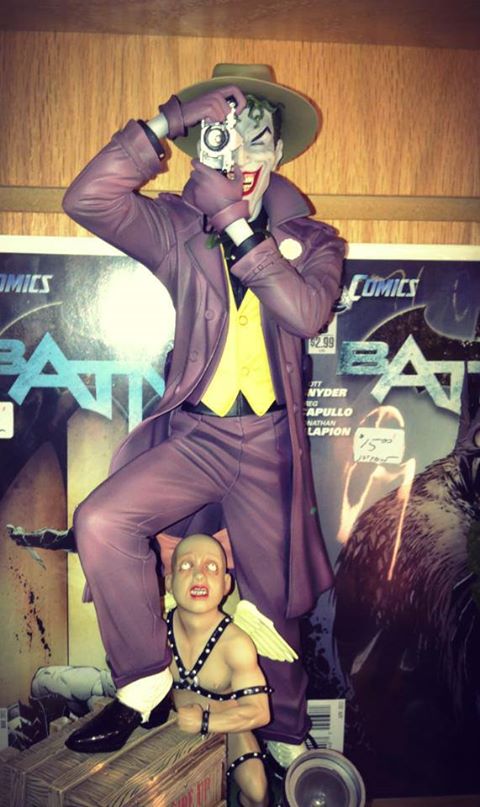
40. This Killing Joker Statue

killing joker

Say cheese.

39. Our July 4th Drink & Draw & BBQ

To celebrate our great nation we will draw in only red, white, and blue. However, as usual, we will be drawing only penises.

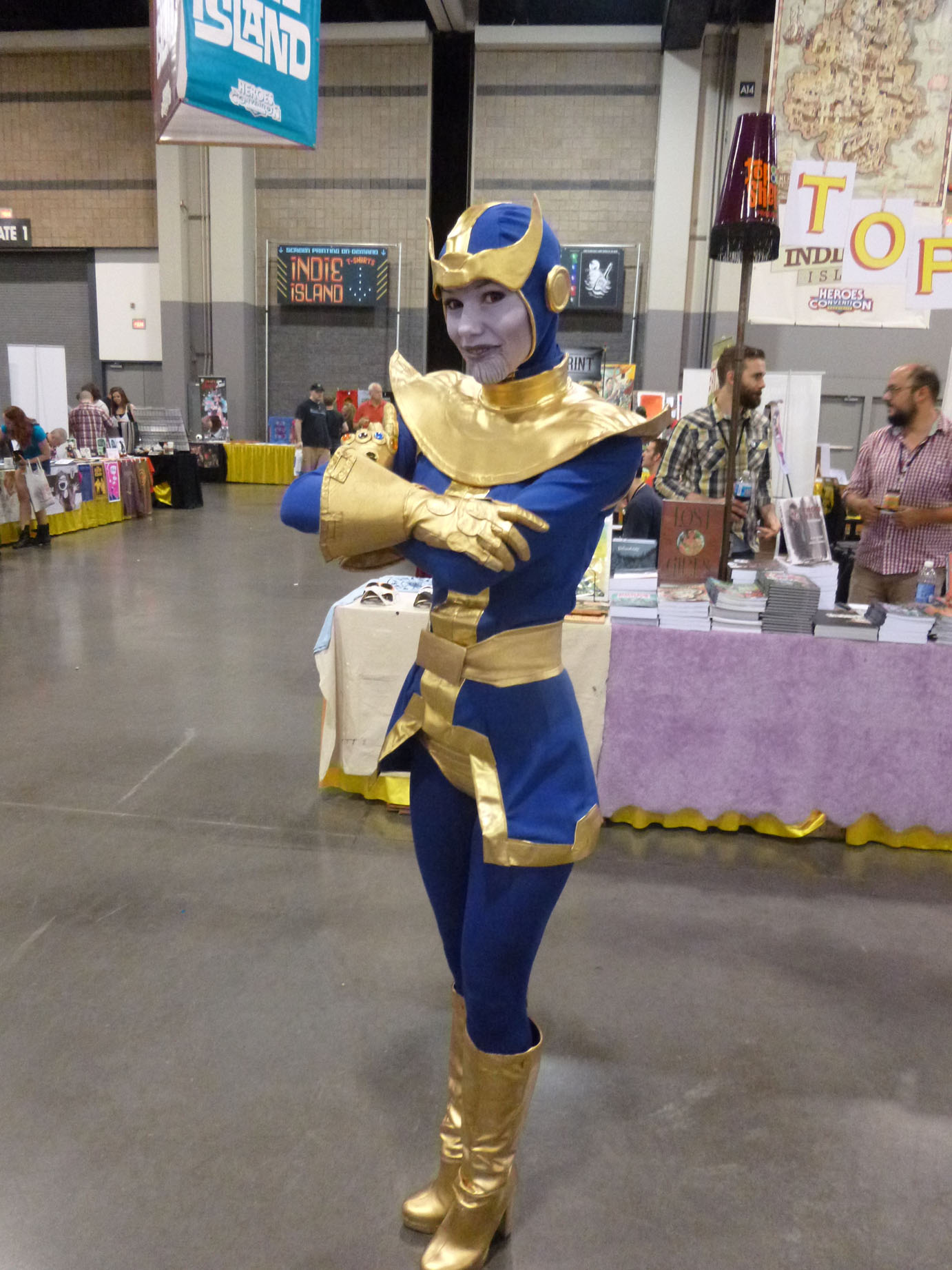
38. Lady Thanos

Our favorite costume of a lot of great efforts at Heroescon.

H P1000180

37. Master Month

Every day this month we will be spotlighting a creator whose name alliterates with a day of the week. Wally Wood and Winsor McCay will be duking it out for control of Wednesday.

36. HOW TO SPEAK POETRY

Are you trying to suggest that you love butterflies more perfectly than anyone else?

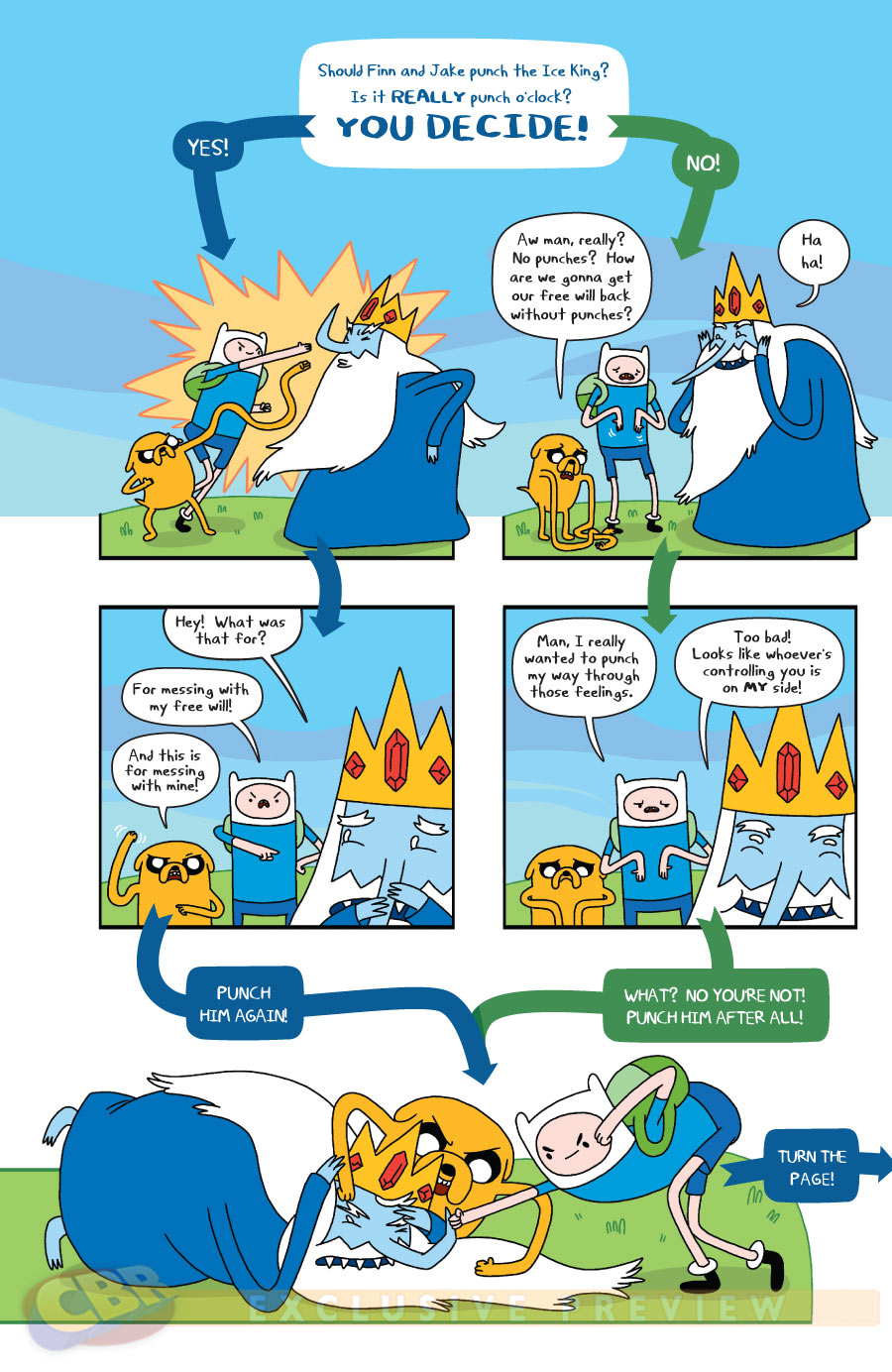
35. ADVENTURE TIME vol. 3

Because everyone should get the chance to choose their own Adventure Time.

chooseyerownAT Continue reading

The Upside Down World of Gustave Verbeek

Gustave Verbeek was a Japanese artist of Dutch extraction who reinvented an American art form. He was published in the bafflingly brilliant New York Herald comics section of the turn of the century, alongside folks like Richard Outcault and Winsor McCay. He was a committed adherent to Nonsense techniques — he liked to set impossible constraints for himself and try to wrestle coherent stories out them. He outpaced the Surrealists by twenty years, and devised his own mind-bending comic strip vernacular out of portmanteau, reversal & esoteric cartoon symbolism.

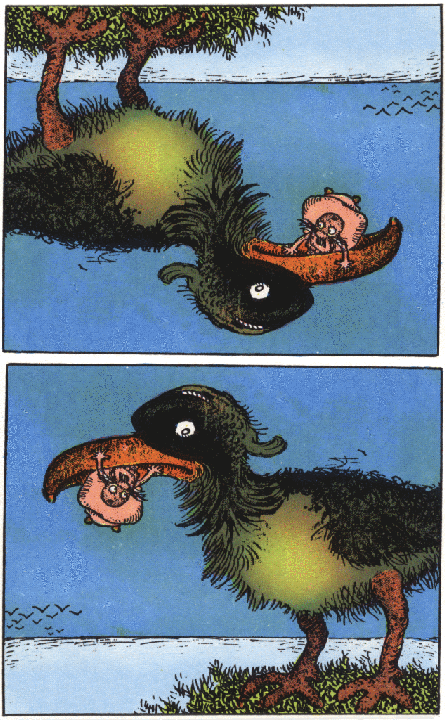
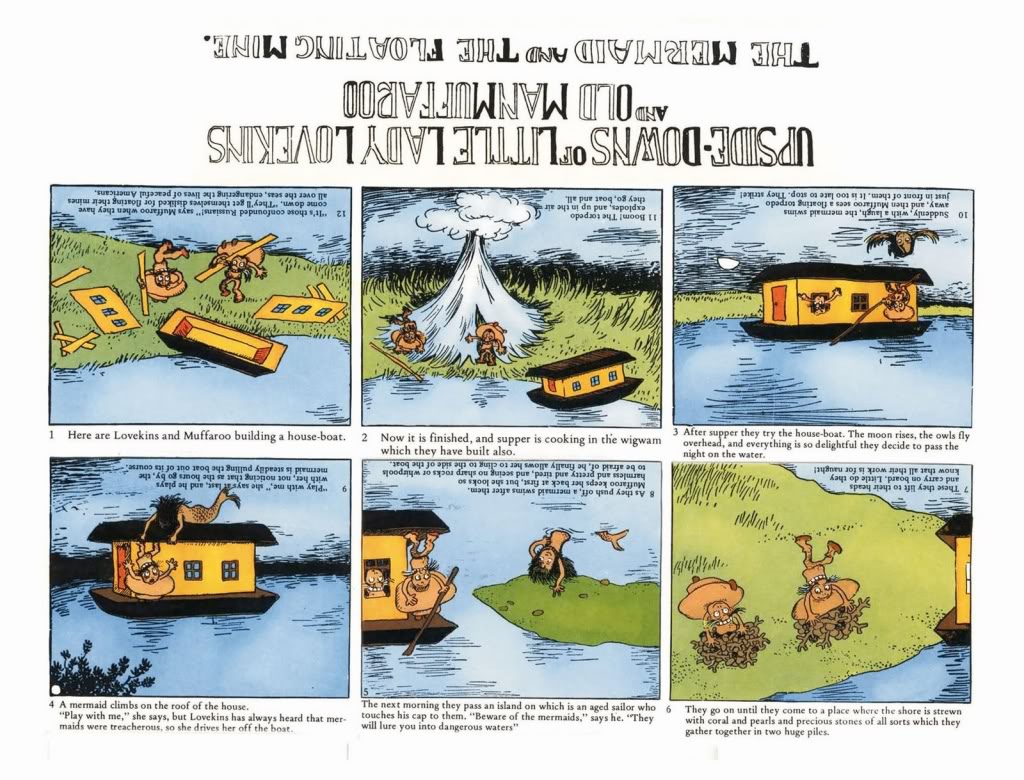
Take a look at this panel from his UPSIDE DOWNS strip.

Image

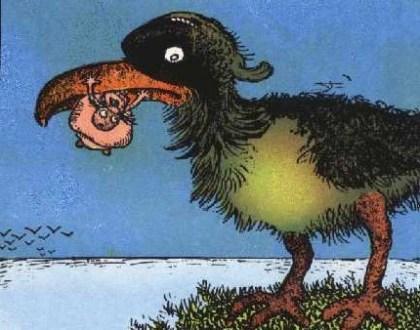
A fish, an island, and a man in a canoe. Now flip it upside down…
Image

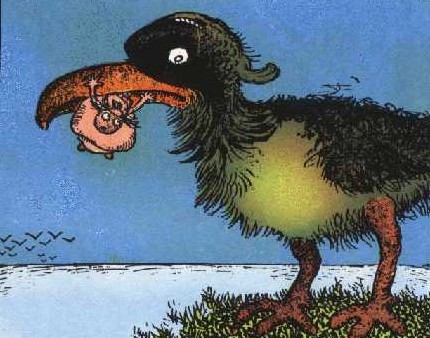
…and it’s a woman being eaten by a bird.

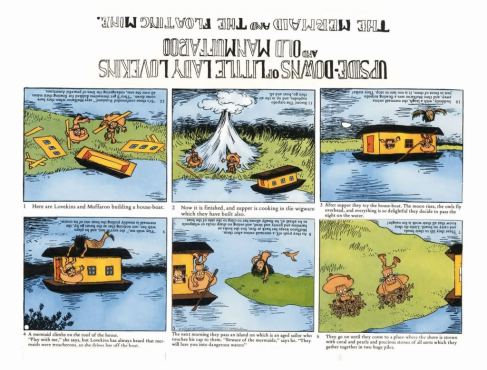
That’s how UPSIDE DOWNS works — six panel strips that read sequentially, which then flip upside down to become panels seven through twelve. The formal challenge of not just creating reversible images but creating images that reverse sequentially into a coherent story is absolutely insane.
Image

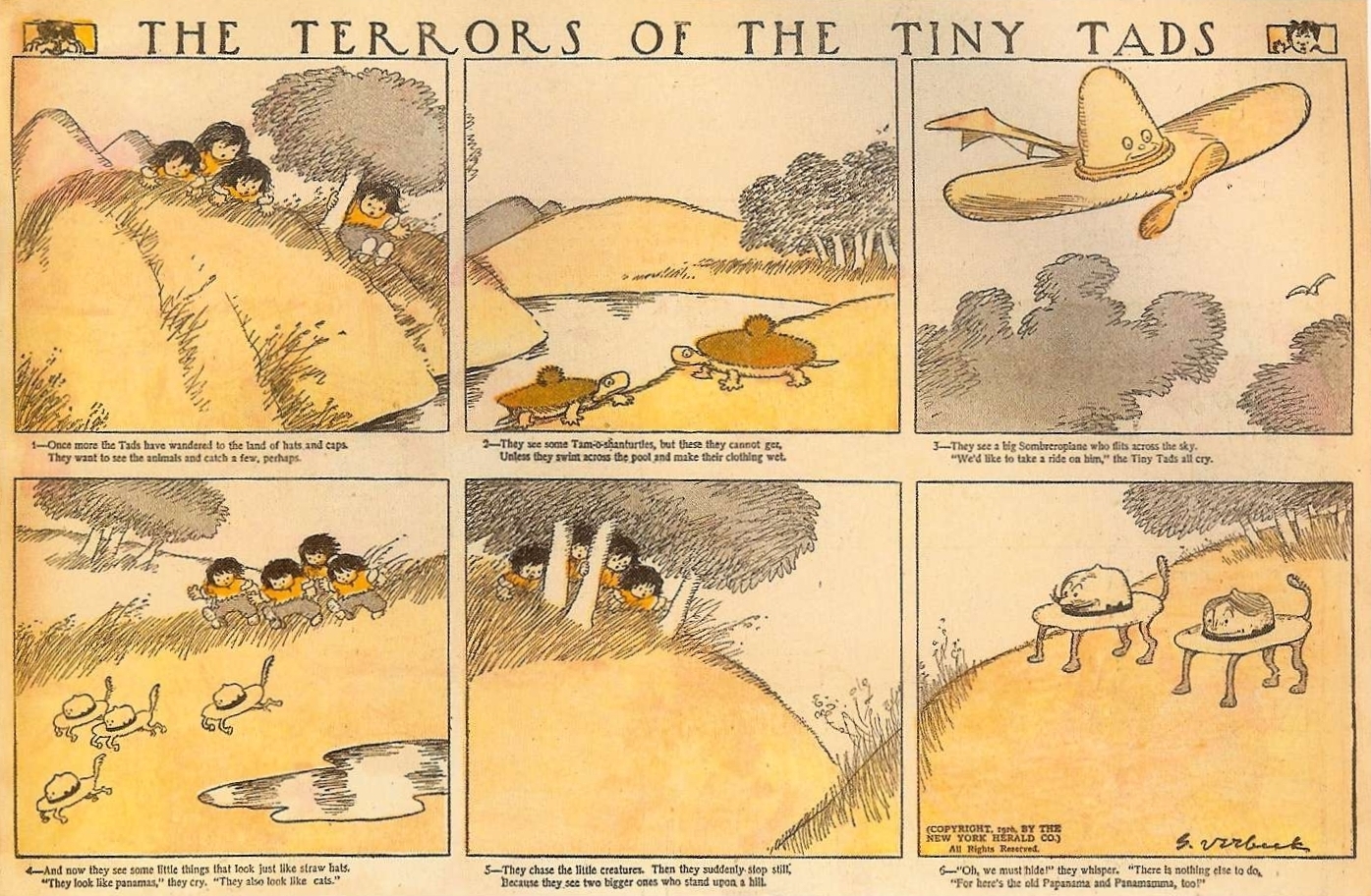
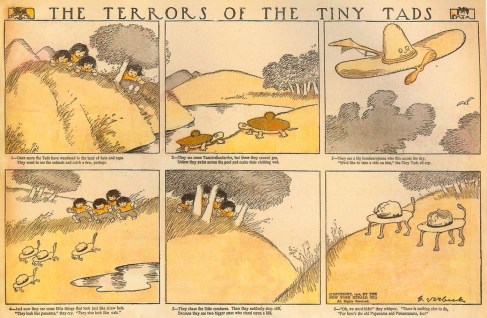
Verbeek also created THE TERRORS OF THE TINY TADS, in which his bizarre visual games started with text: he created hybridized beasts out of combined words. Hippopotomobiles, hotelephants, pelicanoes and sweet potatoads capered across these charming nightmares.
Image

Gustave Verbeek was a weird, fractured genius who invented a brand new language in which to tell stories and crack jokes. He would have fit right in to the Parisian salons of the 1920s. His work is gorgeously spotlighted in a elegant clothbound edition from Sunday Press.

Image

He was a relic of a golden moment in the early 20th century when uniquely, almost inexplicably idiosyncratic talents could be seen in the pages of international newspapers, dancing gloriously to their own broken metronomes.

– Josh O’Neill
the last unicorn

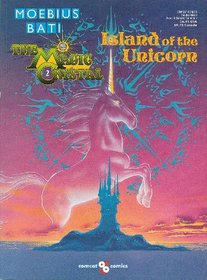
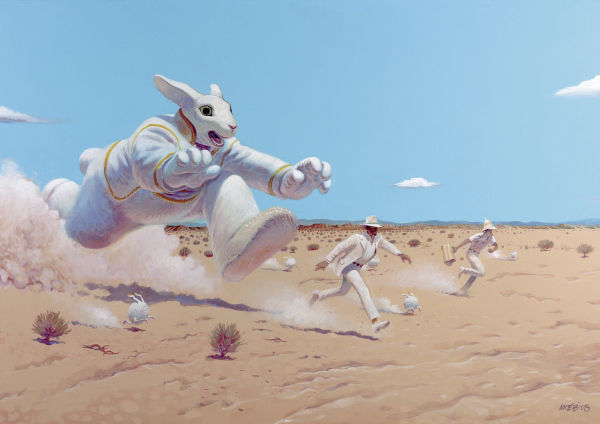
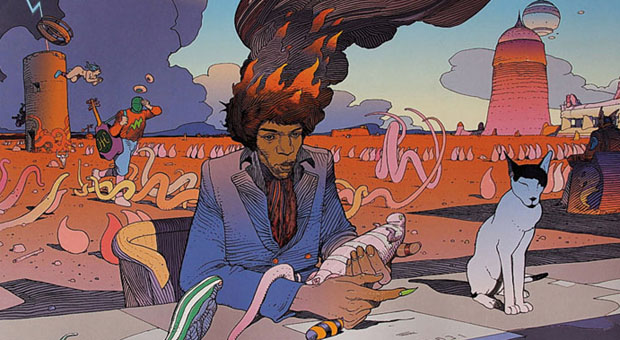
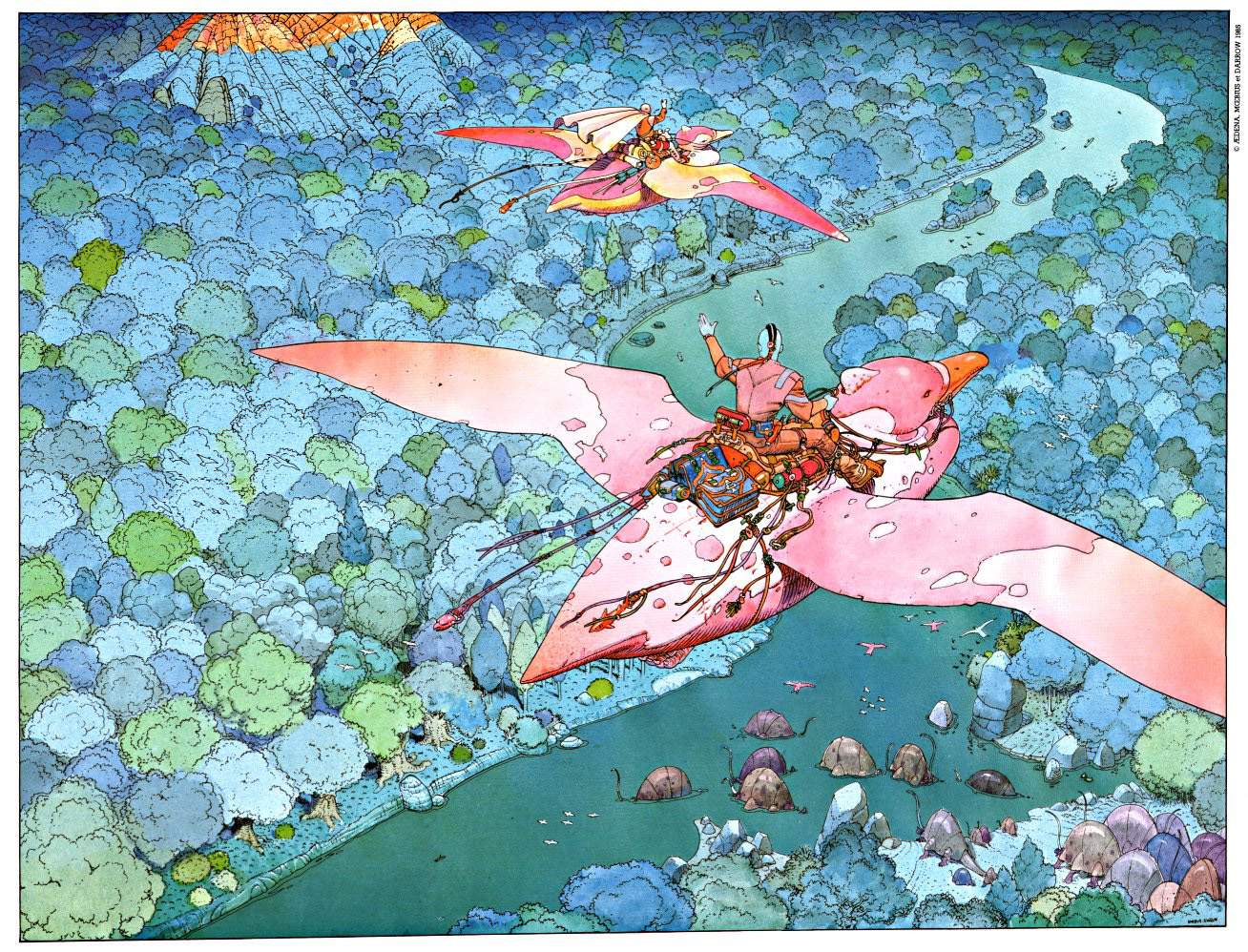
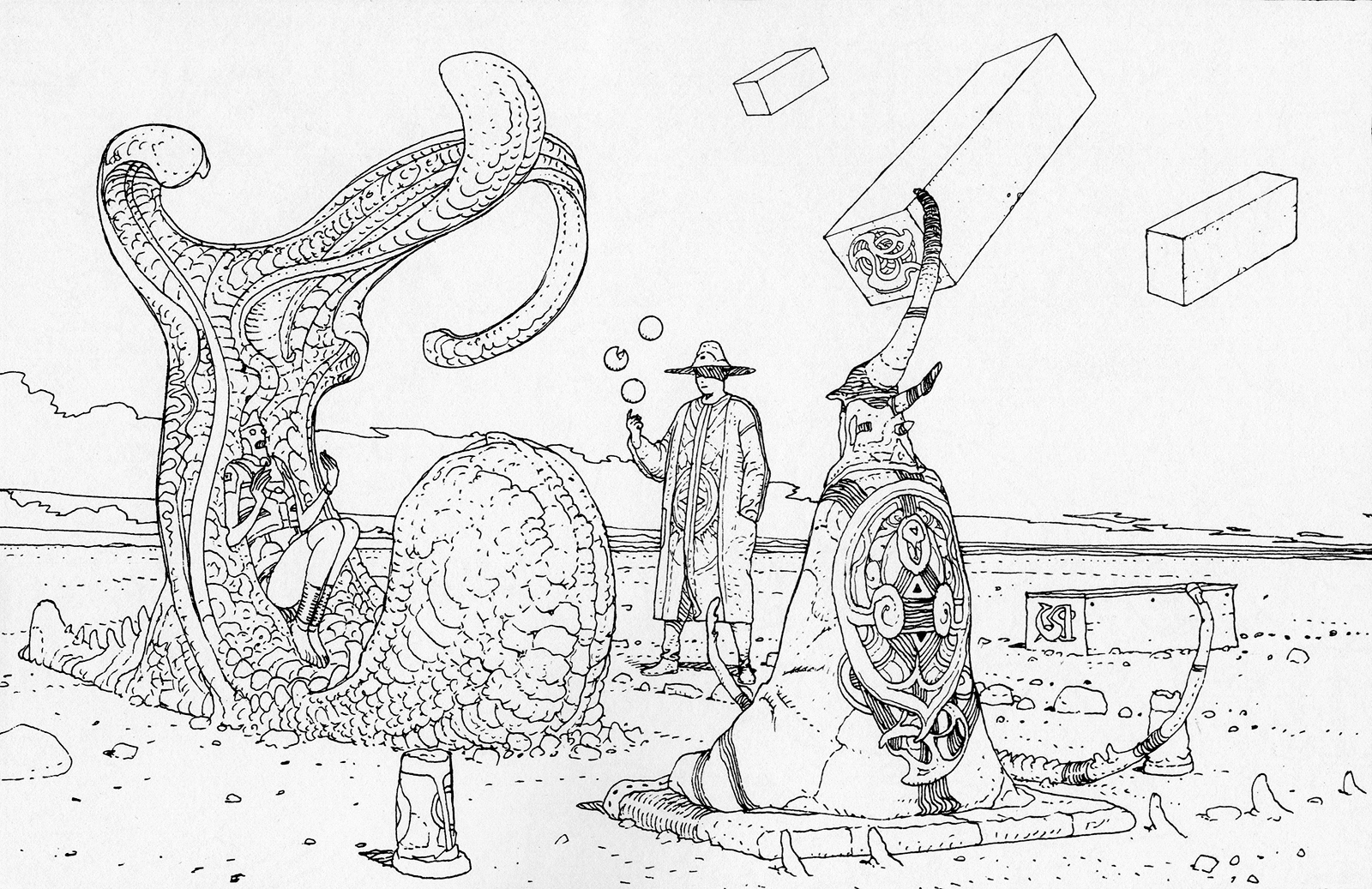
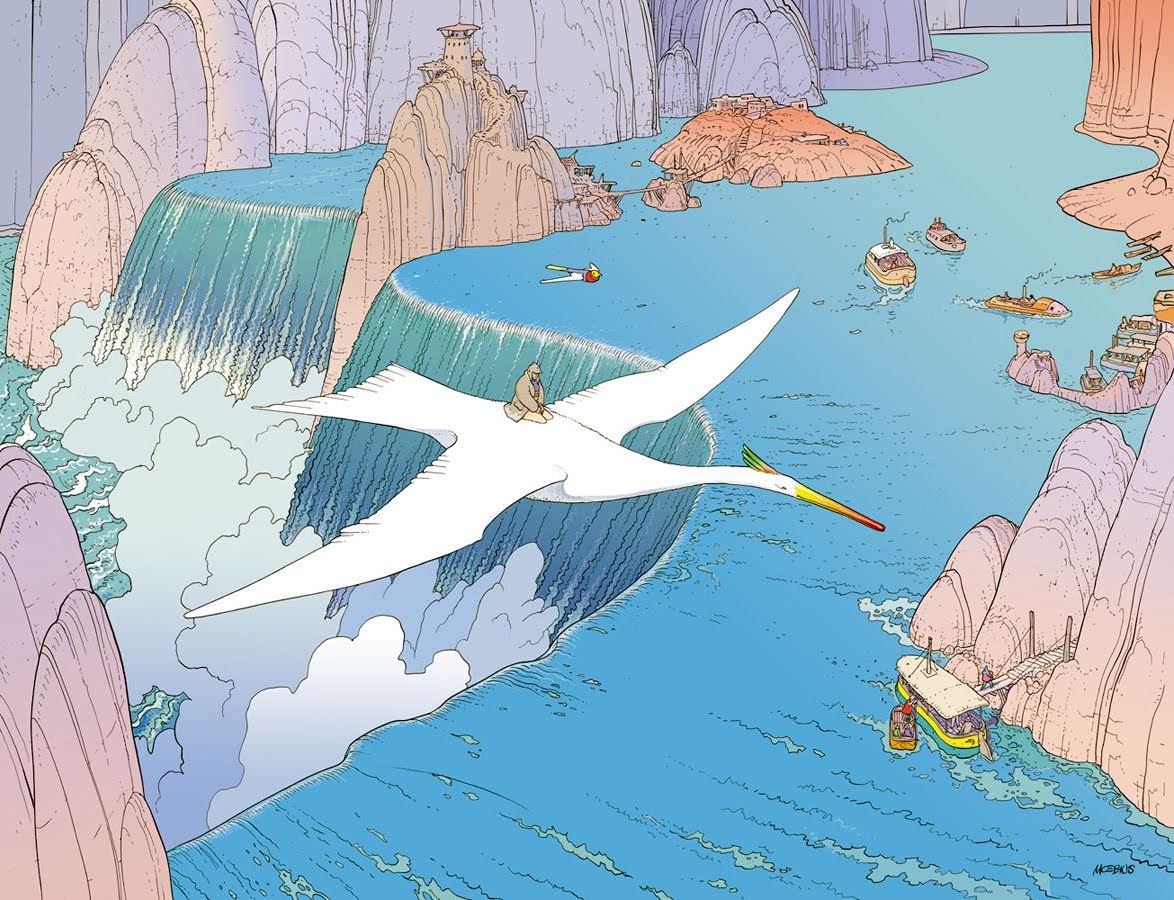
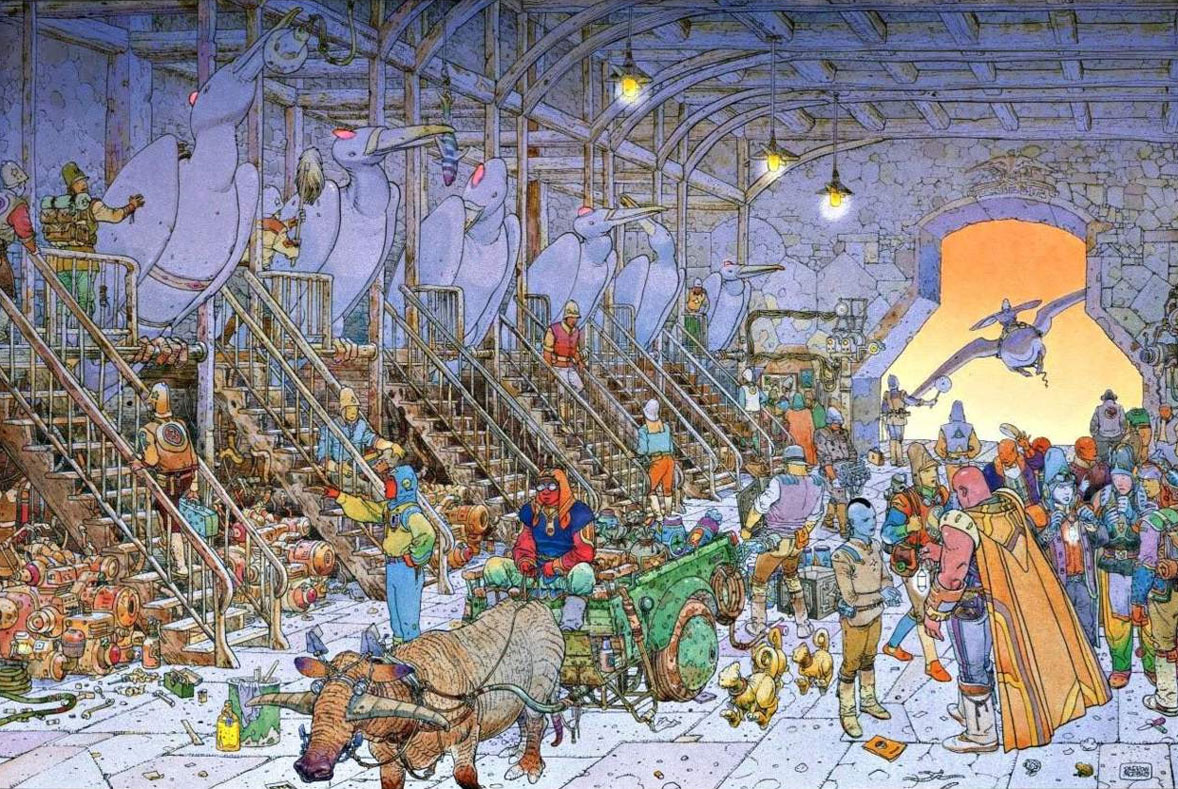
i recently read an interview with moebius where he talked about the unicorn being a symbol in myth & legend for telepathic powers. somehow, as much as i’ve read over the years about myth & legend, i never made that connection. it also got me thinking about one of the last interviews moebius did, where he referred to himself as being like the last unicorn. if anyone else made that statement they’d seem like a pompous ass. with moebius, it just felt appropriate.

Image

Image

Image

Image

Image

Image

Image

Image

Image

Image

–chris stevens

good this week

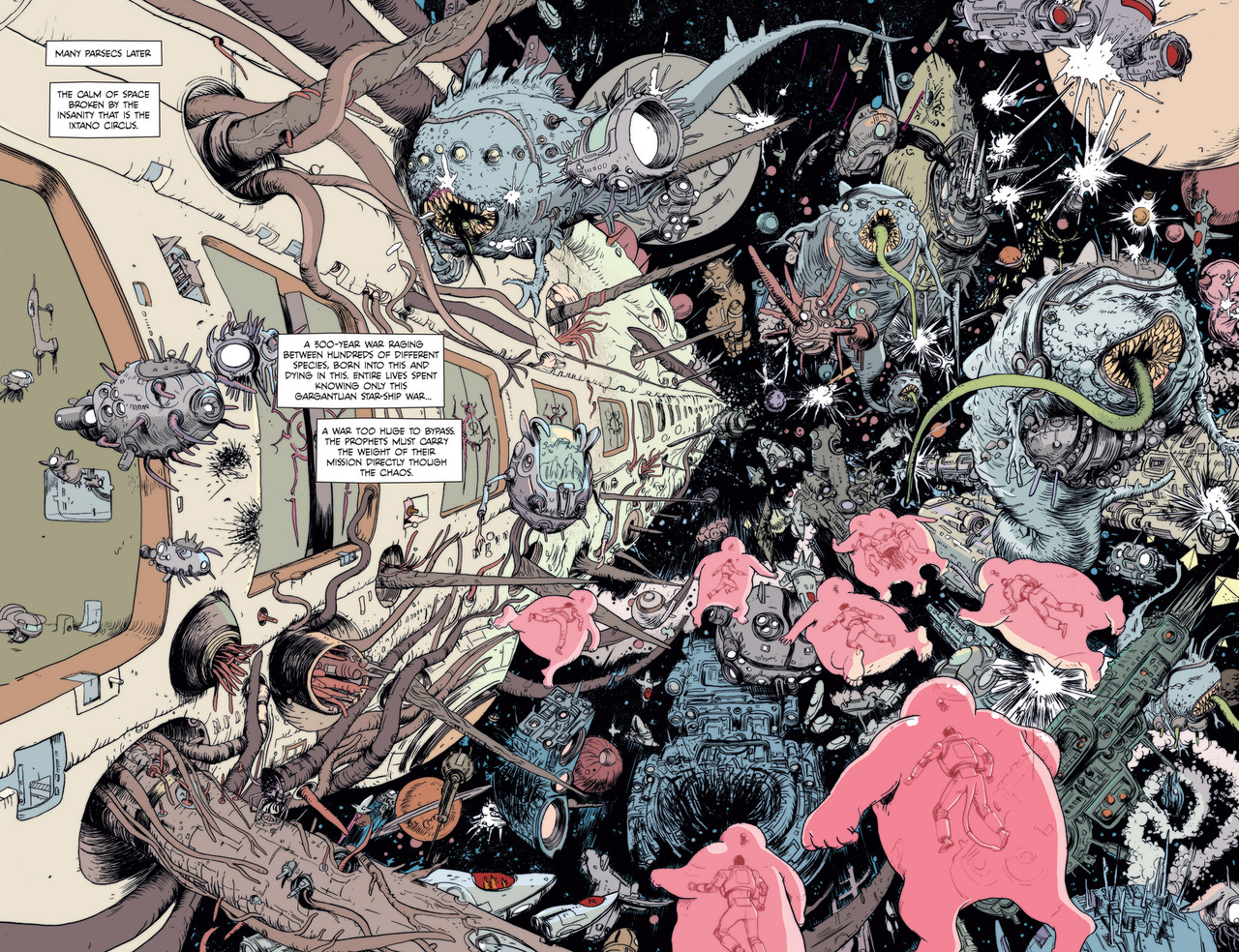
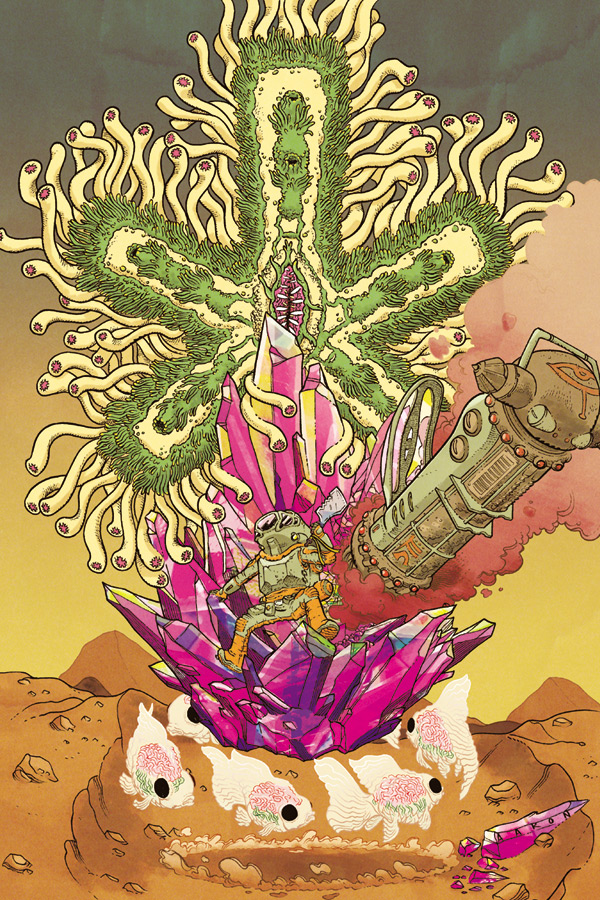
prophet volume #2 & prophet #36 : a double dose of the out of this world series reinvention from brandon graham & company. this second collection has some of the finest art farel dalrymple has done to date.

Image

Image

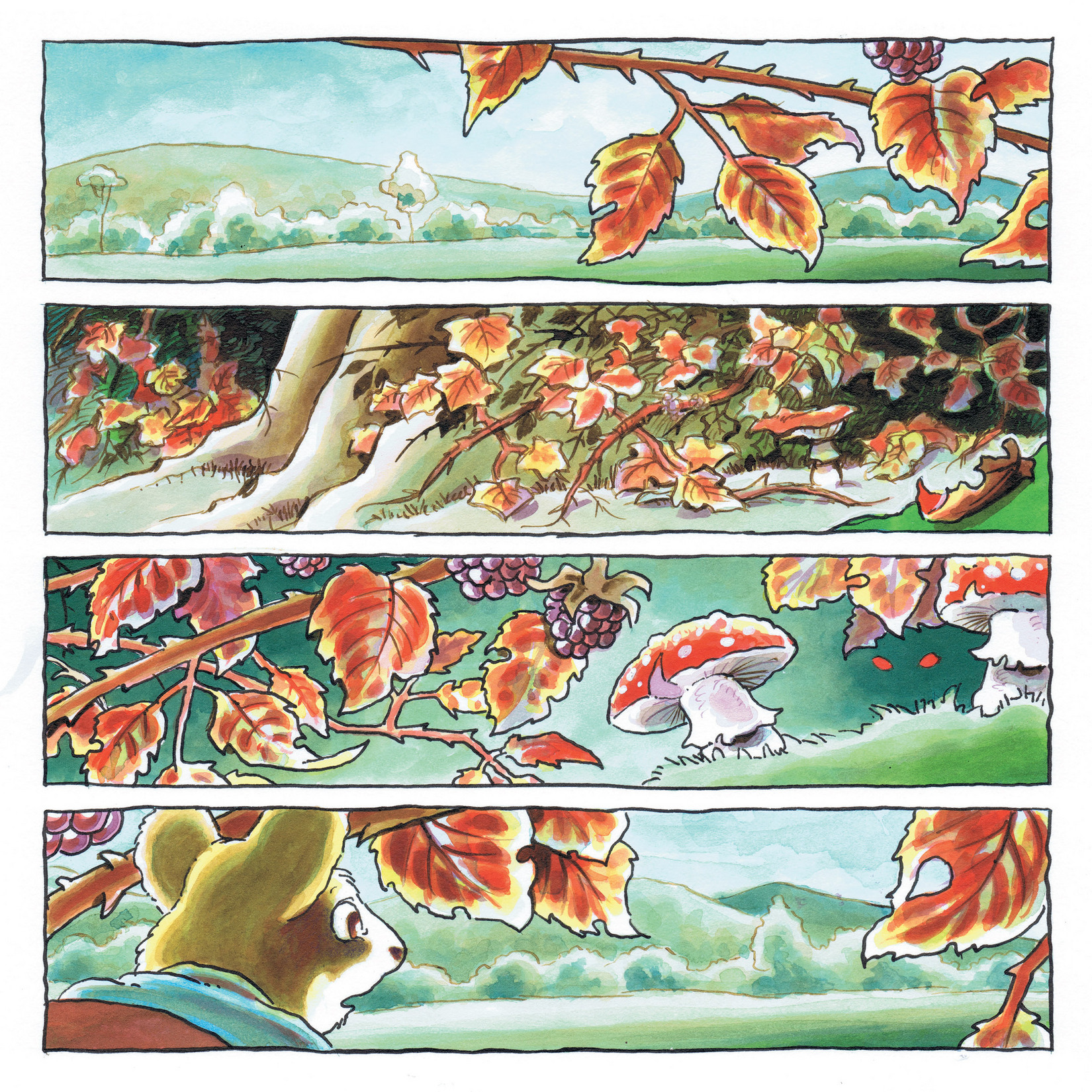
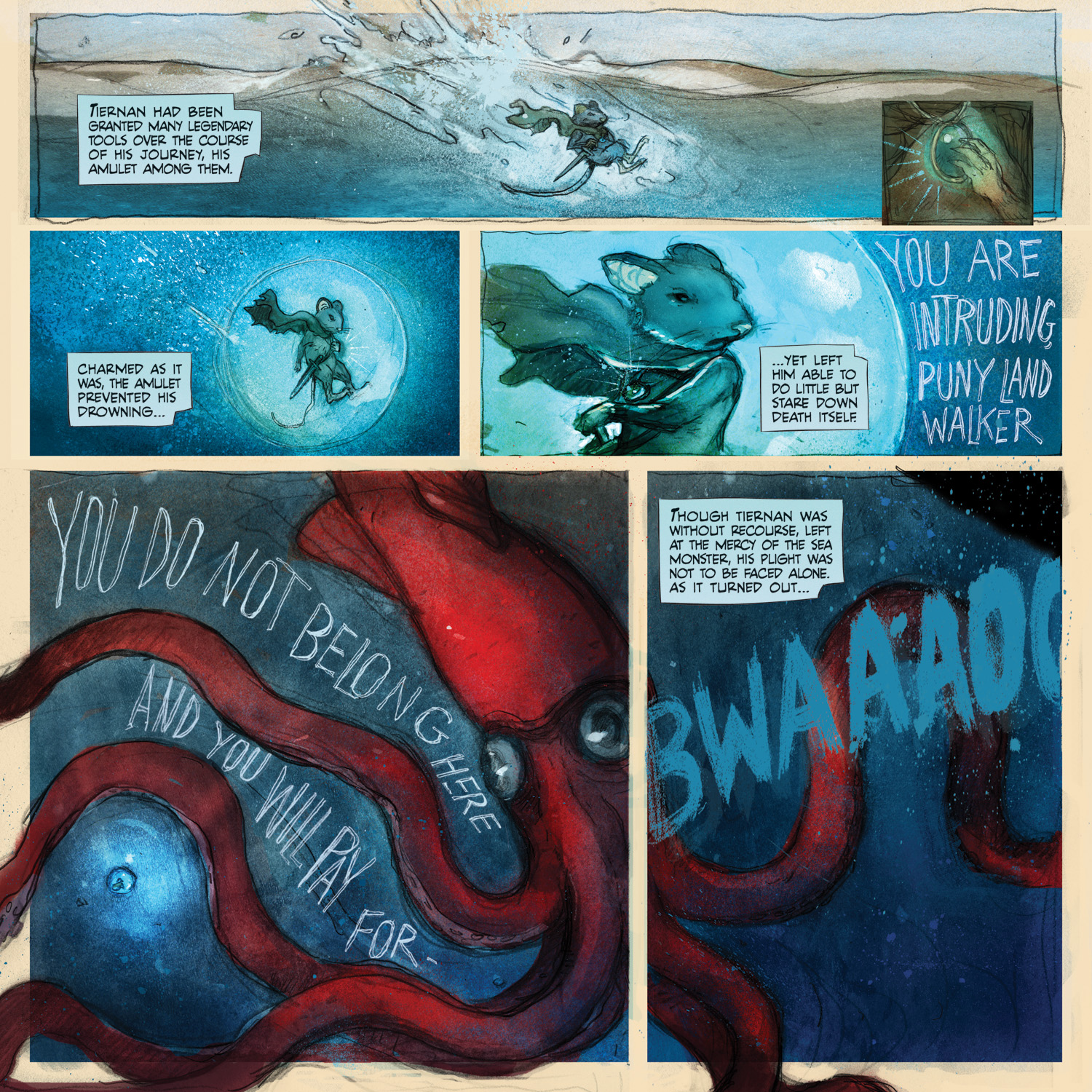
mouse guard: legends of the guard #1 : david petersen’s newest anthology series spinning off of the charming all-ages MOUSE GUARD starts off strong, with petersen providing a framing sequence around some wonderful watercolor pages from stan sakai, a bang-up job by philadelphia’s own alex eckman-lawn, and a superbly delightful turn by ben caldwell.

Image

Image Continue reading

COPRA #7

copra

Michel Fiffe’s COPRA #7 is in the house. A fantastic, introspective issue that makes for a fine jumping on point for new readers and deepens the level of immersion for those of us who have been following along since the beginning. We also have a few copies of the COPRA COMPENDIUM, collecting the out of print issues 1-3. Fiffe sings his gritty warble in the key of Miller & Kirby, but the tune is all his own. If you enjoy good comics, you should be reading this book.

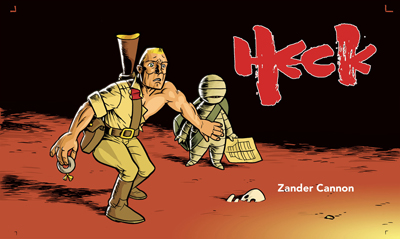
HECK, by Zander Cannon

Image

Zander Cannon’s HECK is a devilish little slice of comics. Just published by Top Shelf in its original strip format, the deadpan fantasy tells the story of Hector “Heck” Hammerskold, a fallen high school football star who slinks back home after the death of his father, and inherits his family’s spooky old Victorian mansion, which just happens to house a portal to Hell. So Heck and his little buddy Elliot, the obsequious waterboy who still sees the faded idol as a star, set up a business running messages between the living and the damned.

Cannon’s book has all the trappings of a rip-roaring yarn, complete with terrifying creatures, rousing derring-do, a femme fatale and a stolen-treasure mystery, a square-jawed hero, and an astonishingly rich & fully developed metaphysics. But underneath its fun and familiar trappings, HECK has a ragged, disappointedly mortal core. It’s a story of regret and loss, of the inevitability of sin and temptation. It asks hard questions about the value of friendship and the nature of love, and doesn’t come up with any easy answers. It’s a skewering of the Hero myth and a celebration of the heroic heart.

HECK’s Hell is a place you come to find out who you really are. When you wind up there, you realize you’ve already been there all along. The story tears its characters to pieces, cutting and condemning until it finds something that refuses to be damned.